
Indication
1. Nosocomial pneumonia: Nosocomial pneumonia is a pneumonia that is acquired from hospital settings after 48 hours of admitting into the hospital.
2. Community acquired pneumonia: Community-acquired pneumonia is defined as pneumonia that is acquired outside the hospital.
3. Concurrent Bacteremia: Bacteremia is the presence of bacteria in the bloodstream. This condition can occur as a result of infections, surgical procedures, or the use of intravenous catheters.
4. Uncomplicated skin and skin structure infection (USSSI): Uncomplicated skin and skin structure infection is a mild to moderate infection involving only the superficial layers of the skin and the underlying soft tissues.
5. Complicated skin and skin structure infection (CSSSI): Complicated skin and skin structure infection is a severe infection involving deeper layers of the skin, underlying tissues, and sometimes muscles or bones.
6. Diabetic foot infection: Diabetic foot infection refers to an infection that occurs in the feet of individuals with diabetes, often due to complications such as poor circulation, neuropathy, and impaired wound healing.
7. Vancomycin-resistant Staphylococcus aureus (VRSA): It is a type of Staphylococcus aureus bacteria that has developed resistance to vancomycin, an antibiotic typically used to treat severe infections. This resistance makes VRSA infections particularly challenging to treat and control. VRSA can cause a range of infections, from minor skin infections to more severe infections like pneumonia, bloodstream infections, and surgical wound infections.
8. Methicillin-resistant Staphylococcus aureus (MRSA): It is a type of bacteria that is resistant to many antibiotics, including methicillin. It can cause various infections, ranging from minor skin infections to more serious conditions like pneumonia or bloodstream infections.
9. Vancomycin-resistant Enterococcus (VRE): It is a type of bacteria that has become resistant to the antibiotic vancomycin, making infections harder to treat with common antibiotics.
Dosage and Administration
| Infection | Pediatric Patients | Adults and Adolescents | Duration (days) |
| Nosocomial pneumonia | |||
| Community-acquired pneumonia, including concurrent bacteremia | 10 mg/kg IV or oral every 8 hours | 600 mg IV or oral every 12 hours | 10-14 |
| Complicated skin and skin structure infections | |||
| Vancomycin-resistant Enterococcus faecium infections, including concurrent bacteremia | 10 mg/kg IV or oral every 8 hours | 600 mg IV or oral every 12 hours | 4-28 |
| Uncomplicated skin and skin structure infections | < 5 yrs: 10 mg/kg oral every 8 hours 5-11 yrs: 10 mg/kg oral every 12 hours | Adults: 400 mg oral every 12 hours Adolescents: 600 mg oral every 12 hours | 10-14 |
OR, AS DIRECTED BY PHYSICIAN.
Composition
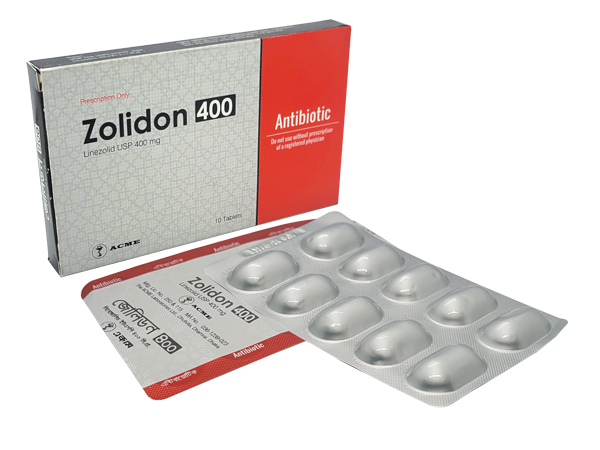
Zolidon 400 Tablet: Each film-coated tablet contains Linezolid USP 400 mg.
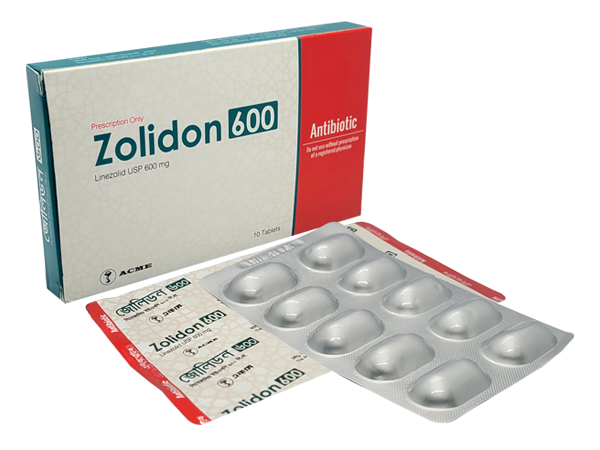
Zolidon 600 Tablet: Each film-coated tablet contains Linezolid USP 600 mg.
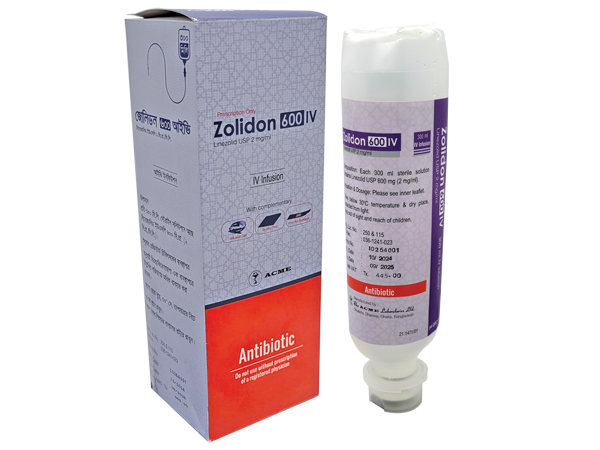
Zolidon 600 IV Infusion: Each 300 ml sterile solution contains Linezolid USP 600 mg (2 mg/ml)
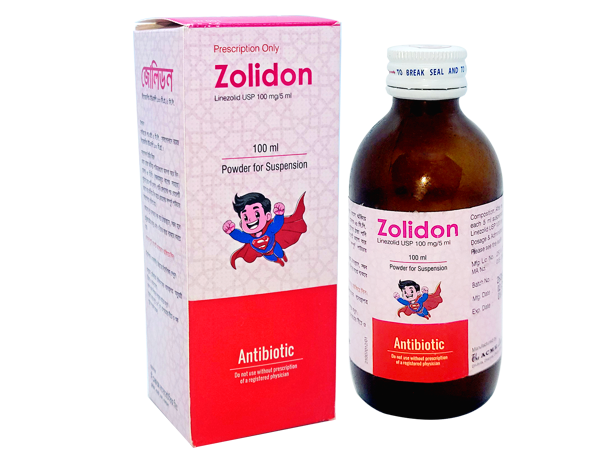
Zolidon Powder for Suspension: After reconstitution, according to direction, each 5 ml suspension contains Linezolid USP 100 mg.